
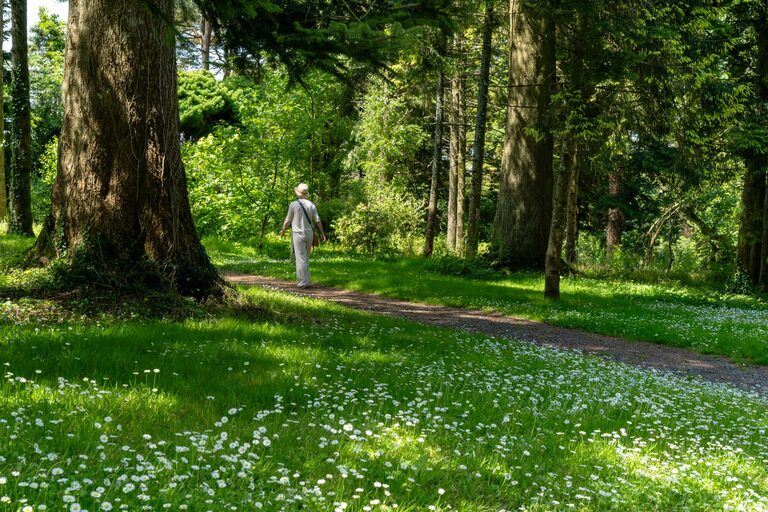
Mindful walking is a simple practice that combines gentle movement with focused attention. Instead of walking while lost in thought, checking your phone, or rushing toward the next task, you notice what is happening in the present moment.
You do not need special equipment, a scenic trail, or a large block of free time. Mindful walking can happen on a sidewalk, around your neighborhood, through a park, or even along a hallway. The goal is not to walk perfectly or empty your mind. It is simply to pay attention to the experience of walking.
What Is Mindful Walking?
Mindful walking means bringing your attention to your body, surroundings, and senses as you move. You may notice the feeling of your feet touching the ground, the rhythm of your steps, the movement of your arms, or the sounds around you.
Thoughts will naturally appear. You may think about work, errands, conversations, or plans. Rather than judging yourself for getting distracted, gently notice the thought and return your attention to walking.
This practice can be:
– A quiet, slow walk focused on breathing and body sensations
– A normal-paced walk with attention to your surroundings
– A short pause between activities
– A way to make a familiar route feel new again
Mindful walking is flexible. You can adapt it to your pace, location, and energy level.
Why Try Mindful Walking?
Many people spend much of the day moving from one task to another without noticing the present moment. A mindful walk creates a small opportunity to slow down and reconnect with your experience.
Potential benefits include:
– Greater awareness of your body and surroundings
– A break from screens and constant notifications
– More appreciation for ordinary moments
– A clearer transition between activities
– A simple way to practice focus
– A more enjoyable walking routine
The value of mindful walking does not come from reaching a particular state. Some walks may feel calm and easy, while others may feel distracted or rushed. Both are normal. The practice is the act of returning your attention whenever you notice it has wandered.
How to Start a Mindful Walking Practice
1. Choose a suitable place
Select a location where you can walk safely and comfortably. A quiet street, park path, garden, school track, or hallway can work well.
For your first few walks, choose a route with limited traffic and obstacles. This makes it easier to focus. If you are walking outdoors, remain aware of vehicles, bicycles, uneven ground, and other people. Mindfulness should support safety, not replace it.
You can begin with a route that takes five to ten minutes. A short practice is often easier to repeat than an ambitious plan.
2. Set a simple intention
Before you begin, take a moment to decide what you want to notice. Your intention might be:
– “I will pay attention to my steps.”
– “I will notice the sounds around me.”
– “I will walk without checking my phone.”
– “I will give myself a few quiet minutes.”
An intention is not a demand to stay focused every second. It is a gentle reminder of where you would like to place your attention.
3. Begin with a pause
Stand still for a moment before walking. Feel your feet on the ground and notice your posture. Let your shoulders relax if they feel tense. You can take one comfortable breath and observe how your body feels.
There is no need to change your breathing or posture dramatically. Simply notice your starting point.
4. Notice each step
Start walking at a natural or slightly slower pace. Bring your attention to the physical experience of movement.
You might notice:
– One foot lifting from the ground
– The leg moving forward
– The foot making contact
– The weight shifting from one side to the other
– The arms moving naturally
– The rhythm of your steps
You do not need to describe every detail in your mind. Choose one or two sensations and stay with them for a few moments.
If counting helps you focus, silently count a small number of steps, such as four or eight. When your attention wanders, begin again without frustration.
Use Your Senses to Stay Present
The senses provide useful anchors during a mindful walk. They help bring attention away from repeated thoughts and back to what is happening now.
Sight
Notice colors, shapes, patterns, shadows, and movement. Look at the sky, trees, buildings, or details you usually overlook. Try observing without labeling everything as good, bad, interesting, or boring.
Sound
Listen for nearby and distant sounds. You may hear footsteps, birds, wind, traffic, conversations, or the hum of equipment. Let sounds come and go without needing to follow one particular noise.
Touch
Feel the temperature of the air, the movement of clothing, and the contact between your feet and the ground. Notice whether the surface is smooth, firm, soft, or uneven.
Smell
Pay attention to scents in the environment, such as grass, rain, food, trees, or clean air. You do not need to search for smells. Simply notice them when they appear.
Using your senses does not mean ignoring practical concerns. Continue looking where you are going and adjust your path when needed.
Add Gentle Breath Awareness
After becoming familiar with your steps, include your breathing. Notice the rise and fall of your chest or the movement of your abdomen. You might match your attention to a few steps while breathing naturally.
For example, you could notice two or three steps during an inhale and two or three steps during an exhale. There is no required pattern. If matching your breath to your steps feels uncomfortable, return to your normal breathing and focus on your feet instead.
The aim is awareness, not control. Avoid forcing deep breaths or trying to create a particular feeling.
What to Do When Your Mind Wanders
A wandering mind is a normal part of mindful walking. You may realize that you have been thinking about a meeting, replaying a conversation, or planning dinner. This does not mean you have failed.
Use this simple process:
- Notice that your attention has wandered.
- Name it quietly, such as “thinking” or “planning.”
- Return to your feet, breath, or surroundings.
- Continue walking.
Try to treat each return as part of the practice. You are building the habit of noticing and redirecting attention, not trying to prevent thoughts entirely.
Common Mistakes to Avoid
Beginners sometimes make mindful walking harder than it needs to be. Keep these points in mind:
– You do not have to walk very slowly.
– You do not need a perfect or silent environment.
– You do not have to stop thinking.
– You do not need to walk for a long time.
– You do not need special clothing or equipment.
– You should not judge the quality of each walk.
Mindful walking is not a performance. A few attentive moments during an ordinary walk are enough to begin.
A Simple Five-Minute Routine
Try this routine on your next walk:
- **Pause for 30 seconds:** Feel your feet on the ground and notice your posture.
- **Walk for two minutes:** Focus on the movement of your feet and legs.
- **Walk for one minute:** Notice nearby sounds without trying to identify every sound.
- **Walk for one minute:** Observe colors, shapes, and light around you.
- **Finish with 30 seconds:** Notice how your body and attention feel before returning to your day.
You can repeat this routine daily or use it whenever you need a brief reset.
Make It a Sustainable Habit
Choose a regular time that fits naturally into your schedule. You might practice after breakfast, during a work break, after lunch, or while walking to a nearby destination.
Keep your approach realistic. If ten minutes feels difficult, begin with two minutes. If outdoor conditions are unsuitable, walk indoors. You can also practice mindful walking without changing your usual route.
Over time, the practice may become easier to remember. More importantly, you may begin noticing small details during ordinary walks without needing to plan a formal session.
Mindful walking is a modest, accessible way to pay attention to the present. Start with a few steps, use your senses as guides, and return gently whenever your mind wanders. The next time you walk, let the journey itself become the focus.